

What a Living Trust Does and Doesn’t Do in Idaho
A living trust is a legal document that holds your property while you are alive and passes it on after you die. You create the trust, place your assets into it, and name a trustee to manage those assets. Most living trusts are revocable, which means you can change or cancel them at any time.
People in Idaho often set up a living trust as part of their estate plan. It can work alongside a will, or in some cases take the place of one. But a living trust is not magic. It has real strengths and real limits, and knowing both sides helps you make a smart choice for your family.
The Benefits of a Living Trust
A living trust offers several advantages over a will alone. Here are the main ones Idaho families should know about.
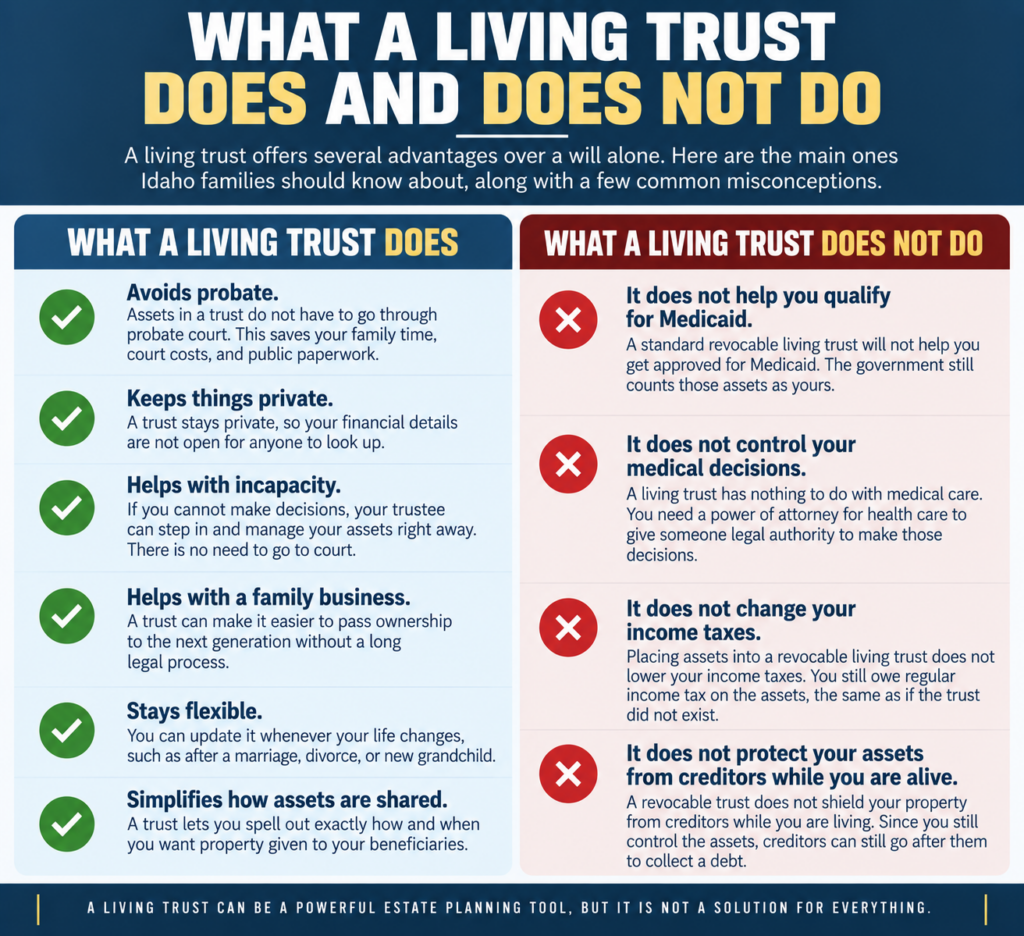
- Avoiding probate. Assets held in a trust do not have to go through probate court. This saves your family time, court costs, and public paperwork.
- Keeping things private. A will becomes part of the public record once it goes through probate. A trust stays private, so your financial details are not open for anyone to look up.
- Planning for incapacity. If you become unable to make decisions because of illness or injury, your named trustee can step in and manage your assets right away. There is no need to go to court for a guardianship.
- Helping with a family business. If you own a business, a trust can make it easier to pass ownership to the next generation without a long legal process.
- Staying flexible. Since the trust is revocable, you can update it whenever your life changes, such as after a marriage, divorce, or new grandchild.
- Simplifying how assets are shared. A trust lets you spell out exactly how and when you want property given to your beneficiaries.
The Downsides of a Living Trust
A living trust is not free, and it is not the right fit for everyone. Some of the common drawbacks include the following.
- Higher upfront cost. Setting up a trust usually costs more than writing a simple will, since it takes more time to draft and set up correctly.
- Ongoing upkeep. A trust only works if you move your assets into it. This is called funding the trust, and it takes effort. Skipping this step is one of the biggest reasons trusts fail to do what people expect.
- No special tax break. A living trust by itself does not lower your income taxes or estate taxes.
- Picking the wrong trustee. Your trustee needs to be someone you trust to follow your wishes and handle money responsibly. Family disagreements over who should serve as trustee are common.
- The need for legal help. Because trust law has specific rules, working with an attorney matters. A trust written or funded the wrong way can create more problems than it solves.
What a Living Trust Does Not Do
Many people believe a living trust can do more than it actually can. Here are four things a living trust will not do for you in Idaho.
It Does Not Help You Qualify for Medicaid
A standard revocable living trust will not help you get approved for Medicaid. Since you can change the trust or take the assets back at any time, the government still counts those assets as yours when it reviews your eligibility. Medicaid is meant for people with little money and few assets, so property sitting in a revocable trust still counts against you.
It Does Not Control Your Medical Decisions
A living trust has nothing to do with medical care. Every adult in Idaho has the right to make their own health decisions. If you become unable to make those choices yourself, someone still needs legal authority to step in for you. That authority comes from a power of attorney for health care, not from your trust. Without one, a court may need to appoint someone through a guardianship case.
It Does Not Change Your Income Taxes
Placing assets into a revocable living trust does not lower your income taxes. Because you keep control of the trust, the law still treats the income earned by those assets as your own. You still owe regular income tax on it, the same as if the trust did not exist.
It Does Not Protect Your Assets from Creditors While You Are Alive
While you are living, a revocable trust does not shield your property from creditors. Since you still control the assets, the law treats them as belonging to you, so creditors can still go after them to collect a debt. This can change after you pass away, since many trusts become irrevocable at death. Once that happens, creditors generally cannot reach those assets anymore.
Common Mistakes Idaho Families Make with Trusts
Even a well written trust can fall short if it is not handled correctly. Some mistakes we see often include:
- Never funding the trust. Creating the document is only step one. If you do not transfer your home, accounts, or other property into the trust, those items may still go through probate.
- Choosing a trustee based on family loyalty instead of ability. A trustee needs to be organized, honest, and willing to follow your instructions, not just someone you feel obligated to name.
- Assuming a trust covers everything. A trust does not replace a power of attorney, a health care directive, or basic tax planning.
- Forgetting to update the trust. A move, a divorce, a new child, or a death in the family can all make an old trust outdated. Idaho families who move between cities, or whose situation changes, should review their trust regularly.
Frequently Asked Questions
Does a living trust avoid Idaho probate?
Yes. Property that is properly placed into a revocable living trust passes to your beneficiaries without going through probate court. Property left outside the trust may still need to go through probate.
Can I change my living trust after I create it?
Yes, as long as it is a revocable trust. You can add or remove assets, change your beneficiaries, or cancel the trust completely while you are alive and able to make decisions.
Do I still need a will if I have a living trust?
Most people still need a will along with their trust. A will can cover any property you did not get around to placing in the trust and can name a guardian for minor children, which a trust cannot do.
Will a living trust protect my house from Medicaid spend down rules?
Not on its own. Since a standard revocable trust still counts as your asset, it will not shield your home from being counted for Medicaid eligibility. Other planning tools may be needed if this is a concern.
Let Us Help With Your Idaho Living Trust
A living trust can save your family time, protect your privacy, and give you more control over your estate. But it comes with real work and real limits, and it is easy to make a mistake without guidance. Johnson May can help you figure out whether a living trust fits your goals, set it up correctly, and make sure your assets actually get placed into it. Reach out to Johnson May today to talk about your Idaho estate plan and get your questions answered.
Tags: